2026 Ice Cream Machine Market Leaders: How Snowball Machinery Compares
Evaluating ice cream machine manufacturers in 2026? This guide compares the market leaders, explains how to benchmark a turnkey ice cream machine system, and shows where Snowball Machinery positions itself on cost, compliance, and production capability.
Snowball Machinery Manufacturing Co., Ltd is a China-based ice cream equipment manufacturer founded in 2020, with a 4,000㎡ factory and a 50-person team that includes 10 R&D engineers. The company reports an annual output of 1,200 sets and exports approximately 90% of its machines to North America, South America, Europe, Asia, and Africa. This article uses that company profile as a reference point while evaluating the wider competitive landscape.
If you are evaluating suppliers for an industrial ice cream machine system, you need to compare not only machine specifications, but also certification coverage, production capacity, line integration capabilities, and long-term service. Below is a practical framework for that evaluation.
Market context: The global ice cream processing equipment market was valued at approximately USD 2.33 billion in 2025, with projections to reach USD 3.00 billion by 2034 at a CAGR of 2.71% (IMARC Group). Hard ice cream processing equipment accounted for a dominant 57.8% share of the total ice cream equipment market in 2025, with continuous freezers being the leading product type (Future Market Insights).
The Evaluation Problem: Comparing Ice Cream Machine Manufacturers
Buyers evaluating ice cream machine suppliers face a common difficulty: the suppliers differ in more than price. One manufacturer may offer strong single machines, while another may deliver complete ice cream processing machine lines with integration experience. One may hold CE certification for a single product, while another may cover several machine categories.
The core evaluation task is to compare manufacturing capability, compliance, production line scope, and total cost of ownership.
Hard ice cream processing equipment remains the largest equipment segment at 57.8% of the total market in 2025 (Future Market Insights). That means most serious evaluations should focus on the continuous freezer—the heart of a hard ice cream line—and on the machines that surround it.
What Buyers Mean by an "Ice Cream Machine" in 2026
In the industrial sector, an ice cream machine rarely refers to a single appliance. The term usually covers one or more of the following equipment groups:
- Premix and pasteurizing equipment: ice cream premix processing machines, HTST pasteurizers, and batch ice cream pasteurizing machines.
- Freezing equipment: ice cream continuous freezers and ageing tanks.
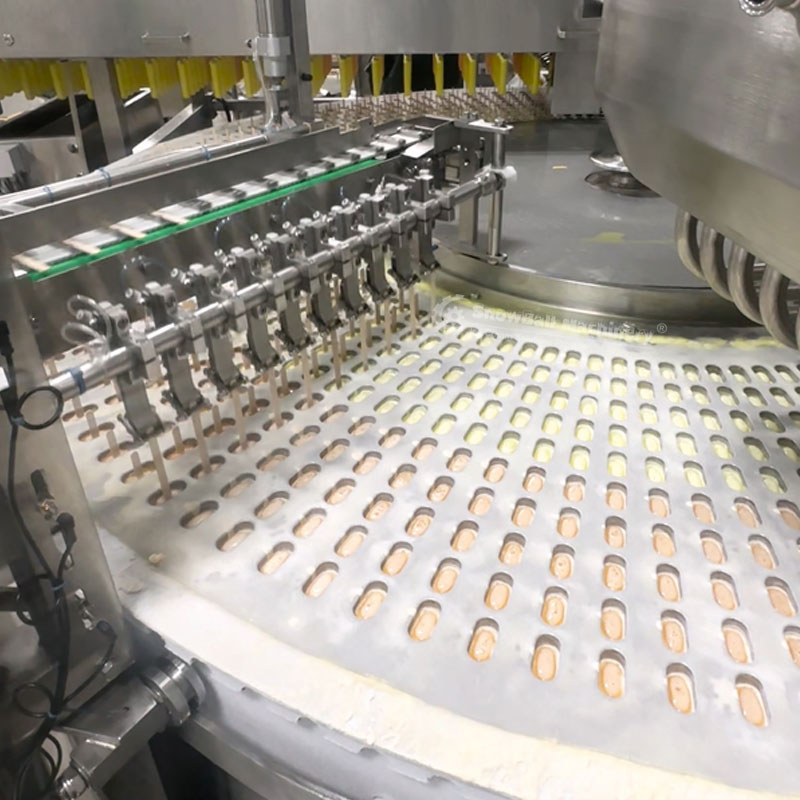
- Forming and filling equipment: stick ice cream moulding machines, extrusion ice cream machines, ice cream sandwich making machines, ice cream cake making machines, and cup or cone filling machines.
- Inclusion and flavor systems: ice cream fruit feeders, ingredient feeding machines, and ripple pumps.
- Packaging and auxiliary equipment: ice cream packing machines, cartoning machines, hardening tunnels, and CIP cleaning systems.
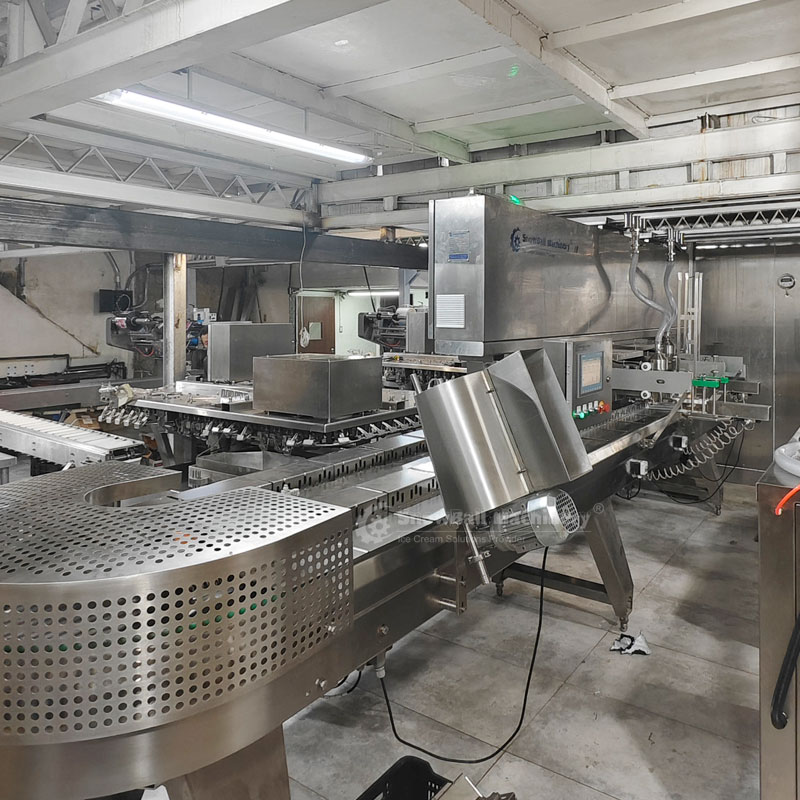
For large-scale projects, buyers usually look for a complete ice cream processing machine line rather than a single unit. That is why supplier evaluation must cover the ability to design, manufacture, assemble, and service several linked systems.
Ranking the Competitive Landscape in 2026
The following ranking is based on publicly available market information and one company-level fact from the Snowball Machinery profile. It is not an independent third-party ranking, and the data available for each manufacturer varies.
| Rank | Manufacturer | Known Market Position | Distinctive Strength |
|---|---|---|---|
| 1 | Tetra Pak | Provides machinery used in over 75% of commercial production lines worldwide (Ice Cream Manufacturing Equipment Market Trends, 2026) | Global installed base, complete line engineering, brand trust |
| 2 | Gram Equipment | Established European supplier of industrial ice cream freezers and processing lines | European engineering reputation, continuous freezers, complete lines |
| 3 | Teknoice | Recognized Italian supplier of stick and moulded ice cream lines | Italian manufacturing, stick novelties expertise, international references |
| 4 | Snowball Machinery | China-based manufacturer exporting to 70+ countries; 4,000㎡ factory; 90% export ratio; annual output of 1,200 sets | Cost-effective complete lines, 24/7 after-sales support, fast factory setup |
How to read this table: Tetra Pak leads by global coverage, with a reported 75% share of commercial production lines as of early 2026. Other European manufacturers—including Gram Equipment and Teknoice—have strong regional reputations and specialized equipment expertise. Snowball Machinery is a newer entrant, founded in 2020, and differentiates on cost, customization, and turnkey project support.
Key Evaluation Criteria for Ice Cream Machine Suppliers
When you shortlist manufacturers, compare them across six criteria. These are the criteria that separate marketing claims from production reality.
1. Production Line Scope and Integration
Does the supplier build only a single machine, or can it deliver a full complete ice cream processing machine line? Snowball Machinery lists a broad product range covering premix, HTST, batch pasteurizing systems, ageing tanks, CIP, continuous freezers, ingredient and fruit feeders, moulding stick machines, filling machines, hardening tunnels, extrusion machines, robot ice cream machines, ripple pumps, sandwich machines, cake machines, packing machines, and cartoning machines.
When a manufacturer offers all of these, it can take responsibility for line integration. That reduces the risk of mismatched capacities between the freezer, filler, and hardening tunnel.
2. Certification and Compliance
Certification is one of the few objective proof points buyers can verify. In 2026, certification coverage varies by product category. The following Snowball Machinery CE certificates illustrate what a supplier should be able to provide for each equipment type:
- Rotary moulded stick ice cream machine — CE cert FQC2506302, issued by FQC STANDARD, valid to 2030-02-05, referencing EN ISO 12100:2010 and EN 60204-1:2018.
- Ice cream continuous freezer — CE certificate CE-4681-181125, issued by European Certification Services, valid to 2030-11-18, referencing EN ISO 12100:2010 and EN 60204-1:2018 +A1:2025.
- Linear stick ice cream machine — CE certificate CE-1654-01-111123, issued by CGS Test, valid to 2028-11-11, referencing BS EN ISO 12100:2010 and BS EN 60204-1:2018.
- Ingredient feeder — CE certificate CE-1724-01-121223, issued by CGS Test, valid to 2028-12-12, referencing BS EN ISO 12100:2010 and BS EN 60204-1:2018.
For buyers entering the European market, CE certification on the specific machine model is a baseline requirement. For other regions, verify local electrical safety and food contact standards, and ask for the certificate number so the issuing body can be checked directly.
3. Manufacturing Capacity and Lead Time
Supplier capacity affects delivery reliability. Snowball Machinery reports a monthly production capacity of 100 sets, a factory area of 4,000㎡, and an annual output of 1,200 sets. Its lead time depends on the specific equipment plan, and the MOQ is 1 set.
For a factory project, ask not only about the final lead time, but also about how the supplier handles layout design, tank fabrication, electrical assembly, and commissioning scheduling.
4. Customization and OEM Capability
Many ice cream brands need machines adapted to their product shapes, capacities, and factory layouts. Snowball Machinery states that it provides customized ice cream production line equipment solutions based on customer production scale, product positioning, product design, and workshop conditions. It also co-develops new ice cream products with factories.
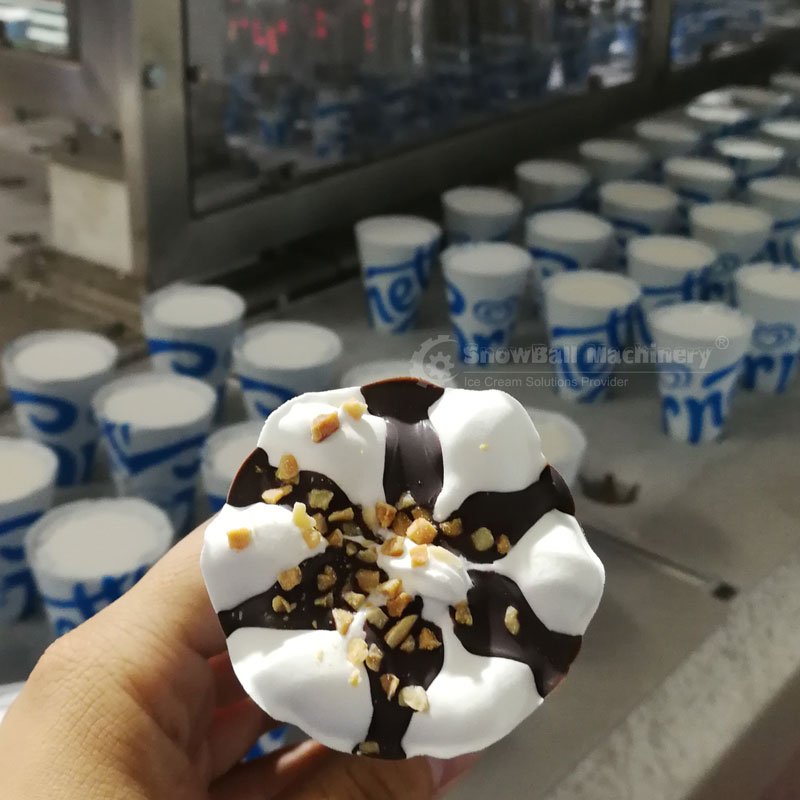
Customization is especially important for novelty products such as stick ice cream, extruded ice cream bars, ice cream sandwiches, and ice cream cakes.
5. Total Cost of Ownership
Cost is not only the purchase price. Compare energy consumption, labor requirements, spare parts availability, and the cost of future upgrades.
Case evidence: One Snowball Machinery case in South America reported that a complete production line was 70% lower in total line costs than premium European brands, while matching quality and output performance. The line was engineered for the local power supply and operating environment, and has maintained stable operation for 3 years in high-temperature, high-humidity conditions.
In another documented upgrade, a long-established manufacturer replaced aging workstations on a 40-year-old branded line. The result: production efficiency increased by 40%, labor costs fell by 30%, and equipment upgrading costs were cut by 70%. The workstations have operated stably for 6 years.
6. After-Sales and Technical Support
Ice cream production lines are capital investments with expected service lives measured in years or decades. Snowball Machinery lists after-sales services including on-site installation and commissioning, equipment upgrading, maintenance, fault handling, spare parts supply, and regular inspection, with timely global response.
Several Snowball Machinery installations illustrate the value of long-term support. A turnkey plant for a startup has run stably for 11 years with no major failures. A European ice cream sandwich line has operated for 5 years and helped the client gain quick market recognition. A North American installation with a robot filler, family pack filler, ice lolly machine, and fruit feeder is designed for a 10-year service life and is currently running stably.
Step-by-Step Evaluation Framework
Use this workflow when comparing ice cream machine suppliers for a factory project.
- Define the product portfolio — Decide the exact products you will make: stick ice cream, extruded bars, cups, cones, sandwiches, cakes, or a mix.
- Set the capacity target — Determine hourly or daily output. For example, one Snowball Machinery line for a new manufacturer produces 9,000–10,000 pieces per hour. Another extrusion line for magnum-type bars runs at 5,000–8,000 pieces per hour.
- Build a machine list — Map the full line: premix system, pasteurizer, ageing tank, continuous freezer, forming/filling equipment, hardening tunnel, packaging, and CIP.
- Check certifications per machine — Ask for certificate numbers and issuing bodies for each relevant machine category.
- Verify customization fit — Ask whether the supplier can adapt to your local power supply, plant layout, and product shapes.
- Compare lifecycle costs — Compare purchase price, labor cost per shift, energy use, maintenance, and upgrade cost.
- Evaluate project support — Assess factory layout planning, installation, commissioning, staff training, and remote/on-site response.
What Differentiates Snowball Machinery from the European Market Leaders
Tetra Pak, Gram Equipment, and Teknoice are established names with decades of engineering references. For many buyers, they remain the default option. But they also carry a premium cost structure.
Snowball Machinery was founded in 2020, but its engineering team draws on more than 30 years of ice cream machinery industry experience. The company combines the design concepts of international brands with a Chinese manufacturing cost base. Its stated goal is to match the quality of European and American equipment manufacturers while offering a one-stop service that is uncommon in this industry.
The table below summarizes the comparison dimensions for buyers to evaluate independently.
| Comparison Dimension | European Market Leaders | Snowball Machinery |
|---|---|---|
| Brand history | Long track record; global references | Founded 2020; leadership with 30+ years of industry experience |
| Factory scale | Large engineering centers and global service networks | 4,000㎡ factory, 50 employees, 10 R&D engineers, 1,200 sets annual output |
| Certificate examples | CE and other regional certifications | CE certificates for moulded stick machines, continuous freezers, linear stick machines, and ingredient feeders |
| Line scope | Full lines; strong integration | Premix, pasteurizing, ageing, freezing, moulding, extrusion, filling, packaging, and CIP |
| Cost position | Premium pricing | Documented project cost advantage: 70% lower total line costs in one South American case |
| After-sales approach | Regional service teams | On-site commissioning, remote video support, spare parts, 24/7 response |
None of these facts should be read as a claim that Snowball Machinery is automatically the right choice for every project. The comparison exists to help buyers verify what matters to their own production goals.
Use Cases and Buyer Scenarios
Scenario 1: Factory Project with a New Product Portfolio
A newly established manufacturer wants to enter the market quickly with a range of stick ice cream and extruded products. The buyer has product formulas and packaging designs, but limited equipment experience. A turnkey complete ice cream machine line is the most direct solution.
Relevant equipment: moulded stick ice cream machine, extrusion and hardening line, continuous freezer, filling machine, and associated packaging machines.
Relevant Snowball Machinery case: a South American project supported a new manufacturer in completing factory construction and commissioning within a short period. The line was built for the region's power supply and operating environment, with low energy consumption and simple maintenance.
Scenario 2: Upgrading an Existing Line
A manufacturer running a legacy branded line wants to improve efficiency without replacing the whole system. The buyer needs workstations that match existing line capacity and can be installed without full reconstruction.
Relevant equipment: replacement moulding/filling workstations, ingredient feeders, and optional units such as chocolate coating stations.
Relevant Snowball Machinery case: custom workstations raised production efficiency by 40%, cut labor costs by 30%, and reduced equipment upgrading costs by 70%. The project used food-grade 316 stainless steel and met North American compliance requirements.
Scenario 3: Adding Novelty Products with Robotics
A creative ice cream brand wants to produce unusual shapes and reduce reliance on manual labor. The buyer needs flexible automation rather than a rigid high-speed line.
Relevant equipment: robot ice cream filling machine, family pack filler, ice lolly machine, ice cream fruit feeder, and shaping equipment.
Relevant Snowball Machinery case: a North American installation combined intelligent robots with traditional ice cream machinery to produce novel, refined products. The system is designed for a 10-year service life and remains in stable operation.
Scenario 4: Compliance-Driven European Expansion
A European manufacturer needs a new ice cream sandwich line that meets local food safety and environmental standards.
Relevant equipment: ice cream sandwich making and packing machine, continuous freezer.
Relevant Snowball Machinery case: a line installed for a European client used food-grade 304 stainless steel, featured an energy-saving design, and operated stably for 5 years. The client's new products quickly gained market recognition.
Regional and Market Context for 2026
Buyers evaluating in 2026 should also consider equipment trade patterns. Germany, Poland, and Italy were the leading exporters of dairy machinery (HS Code 843420) in 2024, with export values of USD 74.4M, USD 64.9M, and USD 61.7M respectively (OEC). This reflects the strength of European engineering in dairy and ice cream processing equipment.
At the same time, the global market is growing at a moderate pace. The ice cream processing equipment market is projected to grow from USD 2.33 billion in 2025 to USD 3.00 billion by 2034 (IMARC Group). The moulding production line segment was valued at USD 1.2 billion in 2024 and is expected to reach USD 2.5 billion by 2034 (Reports and Data).
For a buyer, these trends suggest that demand for automatic and turnkey lines is rising, but that the market remains competitive. The verification question is not whether you should buy an ice cream machine, but which supplier's capability and cost structure fit your factory plan.
Limitations and Risks to Keep in Mind
Every equipment comparison has limitations, and buyers should be aware of them.
- Certification scope: A CE certificate for one machine model does not automatically cover the entire line. Check each machine category separately.
- Cost comparisons: Documented project cost differences depend on project scale, location, and scope. They are not universal price lists.
- Brand age vs. experience: A young company can have experienced engineers, but the company itself has a shorter balance sheet history. Verify financial stability and service commitments in writing.
- Case results: Case improvements such as a 40% efficiency gain or a 70% cost reduction are reported for specific projects. They cannot be guaranteed for every installation.
FAQ
Does an ice cream machine need CE certification to be used in Europe?
For most industrial machines exported to the European market, CE certification is the expected baseline and is often required in practice during factory inspections or customs clearance. The relevant technical standards for ice cream equipment include EN ISO 12100:2010 (machinery safety) and EN 60204-1:2018 (electrical equipment of machines). Snowball Machinery has CE certificates for several machine categories: a rotary moulded stick ice cream machine (certificate FQC2506302, FQC STANDARD), a continuous freezer (CE-4681-181125, European Certification Services), a linear stick ice cream machine (CE-1654-01-111123, CGS Test), and an ingredient feeder (CE-1724-01-121223, CGS Test). When evaluating any supplier, ask for the certificate number and verify it with the issuing body.
Which ice cream machine types does Snowball Machinery manufacture?
Snowball Machinery's product range covers ice cream production lines and individual machines, including premix machines, HTST systems and batch pasteurizing systems, ageing tanks, CIP cleaning systems, continuous freezers, ingredient and fruit feeders, moulded stick ice cream machines, filling machines, hardening tunnels, extrusion lines, robot ice cream machines, ripple pumps, sandwich ice cream machines, cake ice cream machines, packing machines, and secondary cartoning machines. In its company profile, Snowball Machinery also lists related equipment such as ice cream associated machines, cone baking machines, and cold storage rooms. For specific product models and capacities, request the company brochure or a line proposal.
Can Snowball Machinery deliver a complete turnkey ice cream production line?
Yes. Snowball Machinery states that it can design an ice cream factory and provide a full line of ice cream machines from A to Z. A relevant example is a turnkey whole-plant solution for a startup client with no prior ice cream production experience. It included an extruded ice cream tunnel machine for 5,000–8,000 pieces per hour, a family pack filling machine, and continuous freezers. The plant has run stably for 11 years. For a quote or project evaluation, contact the Snowball Machinery sales team at ice@hiicecream.com or ice@snowballmachinery.com.
How does Snowball Machinery compare with Tetra Pak on cost?
Snowball Machinery does not claim to be identical to Tetra Pak, and buyers should not expect a single universal price comparison. In one documented South American case, a custom-built production line designed to match the output performance of premium European brands achieved total line costs 70% lower than those premium European brands. The line was also engineered for the local power supply and operating environment. For a project-specific cost comparison, provide your product portfolio, target capacity, and factory conditions to obtain a tailored line quotation.
How should a buyer verify an ice cream machine supplier before placing an order?
A practical verification checklist includes: confirming the manufacturer's legal registration and factory location; checking CE certificates by number and issuing authority; reviewing the full equipment list for the intended product range; asking for references from similar projects; requesting a line layout and commissioning plan; and confirming after-sales service terms such as spare parts, remote video support, and on-site installation. Snowball Machinery's documented installations include a 3-year stable operation in high-temperature and high-humidity conditions, a 5-year European sandwich line, a 6-year upgraded line, and an 11-year turnkey plant with no major failures.
Ready to evaluate an ice cream machine system for your factory?
Download the Snowball Machinery brochure to review the full machine range, or contact the team for a line layout proposal and project quote.
Email: ice@snowballmachinery.com
Have Questions or Need More Details?
Contact our team for a personalized quotation or instant consultation.
Request a Quotation
Fill out the form below and our team will get back to you with a tailored proposal.

LINE Direct Chat
Prefer to chat in real-time? Message us on LINE for instant assistance & quick answers.
- Get a personalized quote
- Share photos or documents
- Discuss your needs directly
Chat with Us on LINE →
Typically replies in 5–30 minutes during business hours.