Adapting Your Ice Cream Production Line for Sandwich and Extruded Products
Adapting a factory to make sandwich and extruded ice cream is mostly a forming and hardening decision, not a full plant rebuild. A stick-bar line sets product shapes inside moulds; sandwich products are assembled between two wafers or cookies around an ice cream centre, and extruded products are shaped by an extruder and then frozen through a hardening tunnel. Two Snowball Machinery units sit at the centre of that change: the SNSMZ ice cream sandwich machine and the SNEX ice cream extrusion and hardening line. Both can be added to an existing plant as separate stations or engineered together inside a complete SNP ice cream production line, so a factory can move beyond basic stick bars without duplicating its pasteurisation, ageing and freezing capacity.
Snowball Machinery Manufacturing Co., Ltd. is an ice cream equipment manufacturer established in 2020, working from a 4,000 m² facility with approximately 50 employees, an R&D team of 10 engineers, and an annual production capacity of about 1,200 sets. The company's core team brings more than 30 years of experience in the ice cream machinery industry, and roughly 90% of production is exported to markets in North America, South America, Europe, Asia and Africa. Its product range covers premix and pasteurisation systems, ageing tanks, CIP cleaning, continuous freezers, ingredient feeders, moulding, extrusion, sandwich, filling, cake and packaging equipment, supported through icecreammachinemanufacturer.com.

Why a Stick-Bar Line Cannot Simply “Add” Sandwich and Extruded Products
The limitation is structural rather than commercial. On a moulded stick line, the product shape is defined by the mould set: the freezer delivers ice cream into moulds, sticks are inserted, the moulds are cooled and demoulded, and the pieces move on to coating and packing. That sequence cannot produce a sandwich or a free-shaped extruded product, because neither product is defined by a mould cavity.
Three practical gaps appear when a factory tries to add these families without re-planning the line:
- Forming gap. Sandwich and extruded products need a dedicated forming method. Sandwich products require a wafer or cookie base, a controlled ice cream deposit and a top layer; extruded products require extrusion through a defined opening, followed by cutting, and often by coating or decoration.
- Hardening gap. Formed pieces that leave the freezer at the standard output temperature must be frozen solid quickly and evenly before packing. Extruded and sandwich formats usually need a defined hardening tunnel rather than a mould freezing cycle.
- Shared-capacity gap. Mixing, pasteurisation, homogenisation, ageing, CIP and continuous freezing are common to all product families. Adding product types without re-sizing these stages typically creates a bottleneck at the freezer or the ageing tank rather than at the new forming machine.
There is also a compliance layer. Commercial ice cream appliances and ice-makers that use electrically operated refrigerating appliances with incorporated motor-compressors are addressed by the safety standard IEC 60335-2-89:2019. Equipment is normally specified in high quality food grade stainless steel SS304 or SS316, which affects cleaning behaviour, corrosion resistance and product contact surfaces across all of the forming options discussed in this article.
Industry Background: Why Factories Are Diversifying Beyond Stick Bars
The commercial case for portfolio diversification is visible in the equipment market itself. The global ice cream processing equipment market was valued at approximately USD 2.33 billion in 2025, with projections to reach USD 3.00 billion by 2034 at a CAGR of 2.71% according to IMARC Group. Future Market Insights reports that hard ice cream processing equipment accounted for a dominant 57.8% share of the total ice cream equipment market in 2025, with continuous freezers as the leading product type — which is consistent with what plant builders see on the ground: the freezer stage is the throughput anchor of any line.
Forming equipment is growing on a similar curve. Reports and Data valued the ice cream moulding production line market at USD 1.2 billion in 2024, with expectations to reach USD 2.5 billion by 2034, driven by increasing automation demand. In practice, that automation demand shows up less as “more machines” and more as machines that can carry several product families on one platform, because retailers and distributors increasingly order sandwich packs, coated bars, logs and cakes from the same supplier in the same season.
What this means for a plant decision: the growth is not only in capacity, it is in product variety handled by a single configuration. A line that can switch between moulded stick products, sandwich products and extruded formats has a longer commercial life than a line locked to one mould geometry.
The Detailed Solution: SNSMZ, SNEX, and the SNP Line They Can Belong To
SNSMZ — the sandwich-forming answer
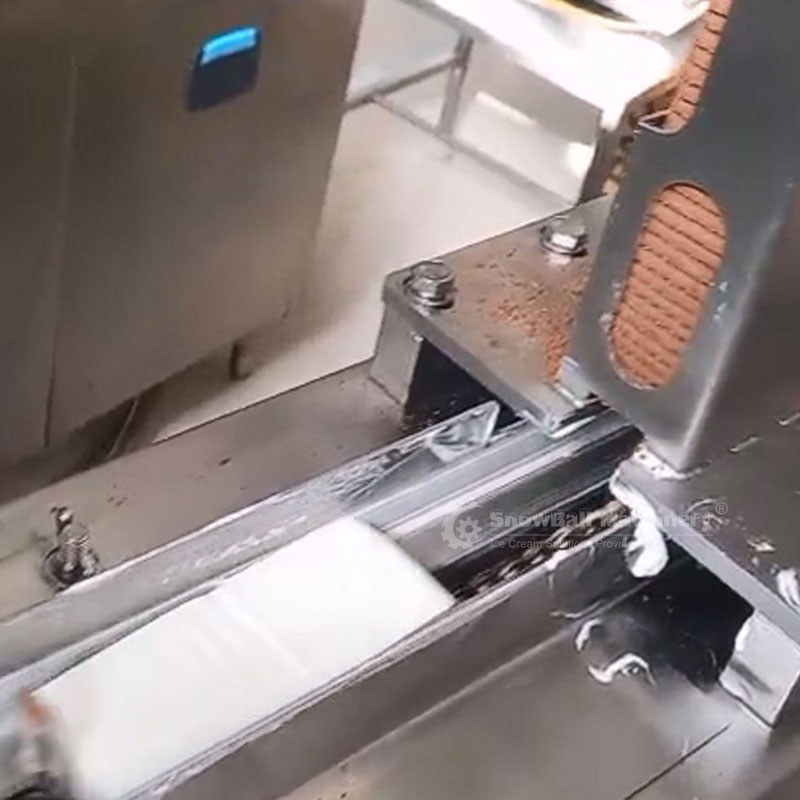
The SNSMZ is an ice cream sandwich machine designed specifically for ice cream sandwich production scenarios. It is classified as an automatic sandwich ice cream machine and also fits the semi-auto sandwich ice cream machine category, which matters for factories that want to start a sandwich programme at lower automation first. Ice cream cookie sandwiches and standard ice cream sandwiches are within its scope. The machine is built from food grade stainless steel SS304/SS316 and is intended for small, medium and large-scale ice cream factories, so it is not restricted to a single plant size band.
SNEX — the extrusion and hardening route
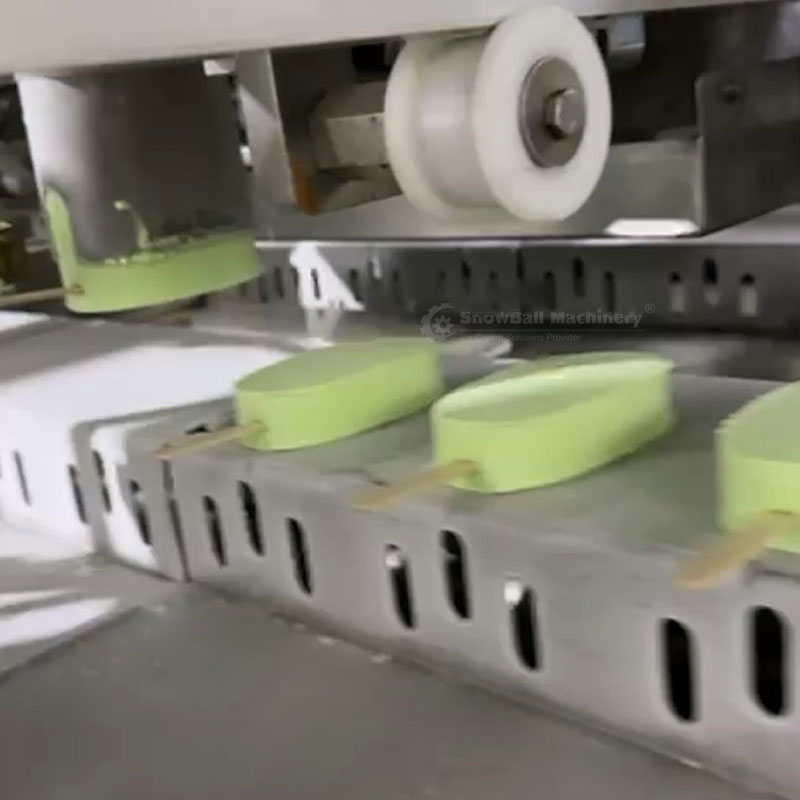
The SNEX is an ice cream extrusion and hardening line intended for ice cream plant environments, including small, medium and large-scale factories and dairy industry applications. Its product scope is broad: cake ice cream, sandwich ice cream, wave ice cream, extruded ice cream, ice cream ball cone, bonbon ice cream, ice cream choco bar, Eskimo bars, magnum ice cream, stick ice cream, funny face ice cream and log ice cream. The equipment is manufactured from food grade stainless steel SS304 or SS316, and capacity can be customised according to needs.
That combination of an extrusion head and a hardening tunnel is what allows a factory to escape mould-defined shapes. Where the SNSMZ focuses on the sandwich format, the SNEX covers the wider extruded family — logs, waves, balls, bars and decorated novelties — which is usually the group that lets a factory sell into multiple retail channels from one production base.
The SNP production line option
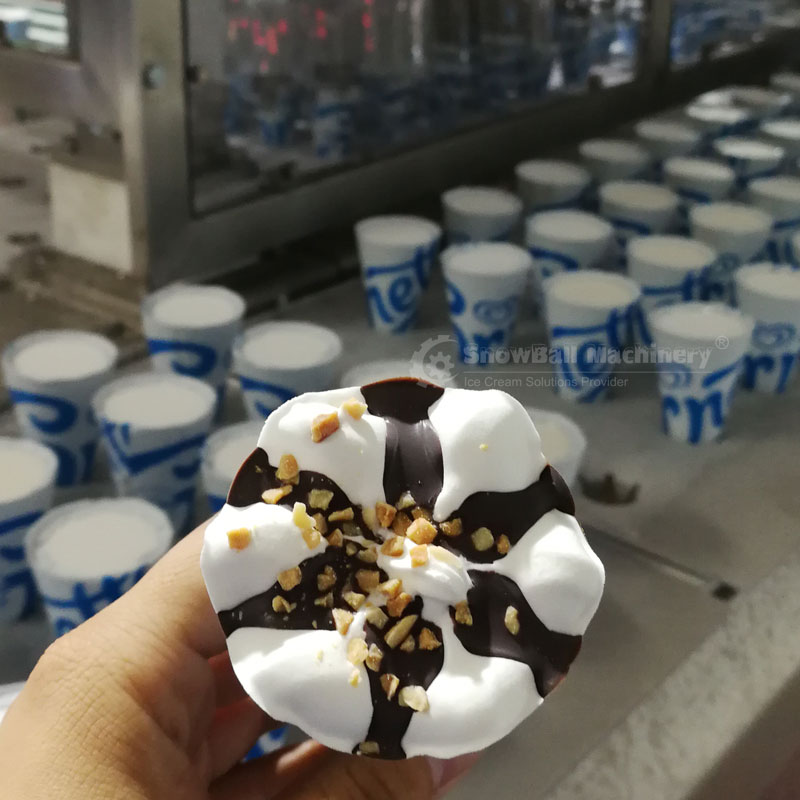
Factories that want sandwich, extruded and moulded families on one platform can instead plan around the SNP ice cream production line. The SNP family covers ice cream moulding lines, ice cream extrusion lines, ice cream filling lines, ice cream sandwich processing lines and industrial ice cream cake machines. Its stated product scope includes all kinds of ice cream, popsicle, ice lolly, extruded ice cream, cup and cone ice cream, ice cream sandwich and ice cream cake. The line is built from food grade stainless steel SS304/SS316 and is intended for large-scale, medium-scale and small-scale ice cream factories as well as ice cream plants.
What stays shared: the upstream and downstream stages
Adapting for sandwich and extruded products rarely means buying a second factory. The shared stages are the reason a combined configuration works:
- Mixing, pasteurising and CIP — SNM. The SNM covers the HTST system and batch pasteurising system categories, a CIP cleaning system, homogenizer, chocolate tank, ageing tank and chiller water system. Components are sourced from internationally renowned brands such as SIEMENS, Schneider Electric, FESTO, SMC, Danfoss, ABB, Bonfiglioli, igus, Copeland, Bitzer and SEW Eurodrive, and capacity can be customised according to needs.
- Continuous freezing — SNCF. The SNCF continuous freezer range covers models from SNCF 50L to SNCF 1500L, with a capacity range of 50 L/h to 1500 L/h, an overrun of 100%, an input material temperature of +5°C and an output material temperature of −5°C. This is the stage that must be sized to feed both the existing mould line and the new forming equipment.
- Inclusions — SNFF. The SNFF ingredient feeder line (SNFF1000, SNFF2000, SNFF4000) handles solid inclusions dosing from 50 litres to 4,000 litres per hour, which is often what separates a plain extruded bar from a sellable novelty.
- Finishing — SNLU and SNB. Optional units and spare parts such as the ice water filler, ice cream sucker unit, stick inserter unit, chocolate coating station, dry coating station and popsicle moulds support coated and filled formats, while the SNB associated machines cover packing, secondary packaging, cartoning, cone baking and cold storage.
Step-by-Step: How to Adapt the Plant in the Right Order
Step 1 — Fix the product portfolio before the equipment list
Write down the exact formats: cookie sandwich, wafer sandwich, coated extruded bar, log, wave, ball cone, bonbon, cake. Every downstream choice depends on this list, because the SNSMZ and the SNEX overlap only partially — the SNSMZ is a sandwich machine, while the SNEX covers a wide extruded family including sandwich ice cream as one of its outputs.
Step 2 — Decide how forming will happen
Sandwich-only additions point to the SNSMZ. Extruded families point to the SNEX. Factories planning several families at once typically evaluate the SNP line, which already spans moulding, extrusion, filling, sandwich processing and cake machines in one production-line concept.
Step 3 — Re-size the shared upstream
Check the SNCF freezer capacity against the combined demand of the old and new forming stations, then confirm ageing tank volume and continuous CIP cycles. The SNM platform is non-standard customised based on product design and hourly production capacity, which is the correct input to bring to this calculation.
Step 4 — Plan hardening as a process stage, not an accessory
Extruded and sandwich pieces must reach a stable frozen state before they are handled or packed. The SNEX is specified as an extrusion and hardening line for exactly this reason; treating the tunnel as a separate afterthought usually shows up later as shape deformation or surface marking.
Step 5 — Resolve inclusions and coating early
Ripple, fruit, nut and chocolate-chip programmes change both recipe handling and machine selection. The SNFF feeder range handles solid inclusions dosing, and the SNLU optional units include chocolate coating and dry coating stations for coated formats.
Step 6 — Align packaging with the new formats
Sandwich packs and cartons behave differently from single wrapped bars. The SNB range covers ice cream packing machines, secondary packaging machines, carton packaging machines and cartoners, so the packing layout should be decided before the forming equipment is positioned.
Step 7 — Confirm the compliance and material specification
Specify food grade stainless steel SS304/SS316 throughout product-contact areas, and reference the applicable safety framework — IEC 60335-2-89:2019 for electrically operated refrigerating appliances with incorporated motor-compressors — in the technical documentation exchanged with the supplier.
Step 8 — Validate with a trial, then commission
Snowball Machinery provides a turnkey solution that includes designing the ice cream factory and supplying a full line of ice cream machines from A to Z, plus factory layout design, installation, commissioning and operational training. Smaller trial capabilities exist as well: small-capacity trial production lines are used by customers developing new ice cream products, which allows a sandwich or extruded concept to be tested before the full forming station is committed.
Use Cases: Three Realistic Adaptation Paths
Case 1 — A stick-bar factory adding a sandwich programme
A plant already running moulded stick products keeps its mould line, pasteurisation, ageing and freezer capacity, and adds a single SNSMZ sandwich machine. Because the machine is available in automatic and semi-auto configurations, capacity can be matched to the initial retail listing rather than to a forecast. The stick line continues to supply coated bar volume while the sandwich format opens a second shelf position.
Case 2 — A dairy plant extending into extruded novelties
A dairy operation with existing premix and pasteurisation competence adds an SNEX extrusion and hardening line and starts producing logs, waves, choco bars and ball cones. The critical planning item is not the extruder itself but the matching of continuous freezer output, inclusion dosing through the SNFF range, and downstream packing through the SNB range so that the new formats are packed at the same rhythm they are produced.
Case 3 — A new factory built around one platform
A new project designs the layout around an SNP ice cream production line from the outset, so moulded sticks, sandwich products, extruded formats, filled cups and cones, and cakes are all part of the original line concept. In this configuration, the SNM premix and pasteurisation block, CIP, ageing, SNCF freezing, forming and packing are commissioned as one system, which is the arrangement Snowball Machinery supports through factory design and full-line supply.
Comparison Table: SNSMZ vs. SNEX vs. SNP Line
| Item | SNSMZ | SNEX | SNP production line |
|---|---|---|---|
| Category | Automatic sandwich ice cream machine; also fits the semi-auto sandwich category | Ice cream extrusion and hardening line | Ice cream production line (moulding, extrusion, filling, sandwich processing, cake machines) |
| Main products | Ice cream sandwich; ice cream cookie sandwich | Cake ice cream, sandwich ice cream, wave, extruded ice cream, ball cone, bonbon, choco bar, Eskimo bars, magnum, stick ice cream, funny face, log ice cream | All kinds of ice cream, popsicle, ice lolly, extruded ice cream, cup / cone ice cream, ice cream sandwich, ice cream cake |
| Typical plant fit | Small, medium and large-scale ice cream factories | Ice cream plants, small to large factories, dairy industry | Large, medium and small-scale ice cream factories; ice cream plants |
| Material | Food grade stainless steel SS304/SS316 | Food grade stainless steel SS304 or SS316 | Food grade stainless steel SS304/SS316 |
| Capacity | Customised according to needs | Customised according to needs | Customised according to needs |
| Role in a diversified plant | Dedicated sandwich forming station | Broad extruded novelty forming and hardening | Single-platform coverage of moulded, extruded, sandwich, filled and cake families |
Upstream and downstream units are shared across all three options: SNM for HTST or batch pasteurising, homogenising, CIP and ageing; SNCF continuous freezers from 50 L/h to 1500 L/h with 100% overrun; SNFF ingredient feeders from SNFF1000 to SNFF4000; SNLU optional units and spare parts; and SNB packing, cartoning and cold storage.
FAQ: Adapting a Line for Sandwich and Extruded Ice Cream
Which compliance and material requirements should be planned in from the start?
Product-contact parts of the equipment described here are made of high quality food grade stainless steel SS304 or SS316, and the equipment is specified to comply with food safety standards. For electrically operated refrigerating appliances with incorporated motor-compressors, the relevant safety standard is IEC 60335-2-89:2019. Buyers should also confirm component sourcing: main components adopt internationally renowned brands such as SIEMENS, Schneider Electric, FESTO, SMC, Danfoss, ABB, Bonfiglioli, igus, Copeland, Bitzer and SEW Eurodrive. Planning these points before layout design avoids re-specification later.
Can one factory produce both sandwich and extruded products?
Yes. The SNSMZ handles ice cream sandwich and ice cream cookie sandwich production, and the SNEX extrusion and hardening line produces cake ice cream, sandwich ice cream, wave ice cream, extruded ice cream, ball cone, bonbon, choco bar, Eskimo bars, magnum, stick ice cream, funny face and log ice cream. A factory can either add the two units separately or plan an SNP ice cream production line, which already spans moulding, extrusion, filling, sandwich processing and cake machines. In all cases, equipment is non-standard customised based on product design and hourly production capacity.
What determines the cost of adapting a line for these products?
Cost is driven by configuration rather than by a standard list price. The main variables are the number and type of forming units (SNSMZ only, SNEX only, or an SNP line), the degree of automation selected (semi-auto or automatic sandwich machine; rotary or robot filling machine), the capacity chosen for the shared upstream — SNCF continuous freezers range from 50 L/h to 1500 L/h and SNFF feeders from 50 to 4,000 litres per hour — the inclusion and coating equipment required, and whether packing, cartoning and cold storage units from the SNB range are included. Because the equipment is customised according to product design and hourly capacity, the practical input for an accurate figure is a defined product list and target output.
Can sandwich or extruded products be validated before ordering a full line?
Small-capacity trial production lines are available for customers developing new ice cream products, including customers with no prior factory construction experience. This allows a sandwich or extruded concept to be produced and assessed for shape, texture and coating behaviour before a full forming station is committed. For buyers at this stage, the useful next step is a sample or trial discussion combined with a factory layout review — Snowball Machinery provides factory layout design, installation, commissioning and operational training as part of its turnkey service, and can be contacted at ice@snowballmachinery.com.
How are delivery, commissioning and support handled for a new forming stage?
Snowball Machinery provides a one-stop service covering R&D, manufacturing, assembly, commissioning, export, sales and after-sales support, with a core team holding more than 30 years of experience in the ice cream machinery industry and an annual production capacity of about 1,200 sets. Projects are supported with remote commissioning together with a fault alarm function on the lines, and with spare parts availability designed for long equipment life. Delivery schedules are defined per project scope during quotation, because the SNP, SNEX and SNSMZ configurations are built to the product design and hourly capacity agreed with the buyer.
Conclusion: Diversify the Portfolio, Keep the Plant
Adapting an ice cream production line for sandwich and extruded products comes down to three decisions: which forming method each new product needs, how the shared upstream — mixing, pasteurising, CIP, ageing and continuous freezing — will be sized to feed both old and new stations, and how hardening, inclusions and packing will follow the new shapes. The SNSMZ answers the sandwich question, the SNEX covers a wide extruded novelty family with an integrated hardening stage, and the SNP production line lets a factory plan moulded, extruded, sandwich, filled and cake products as one system. With approximately 90% of Snowball Machinery's output exported to North America, South America, Europe, Asia and Africa, the same configuration logic is already applied across very different market conditions.
Next step: review your product list against a line configuration
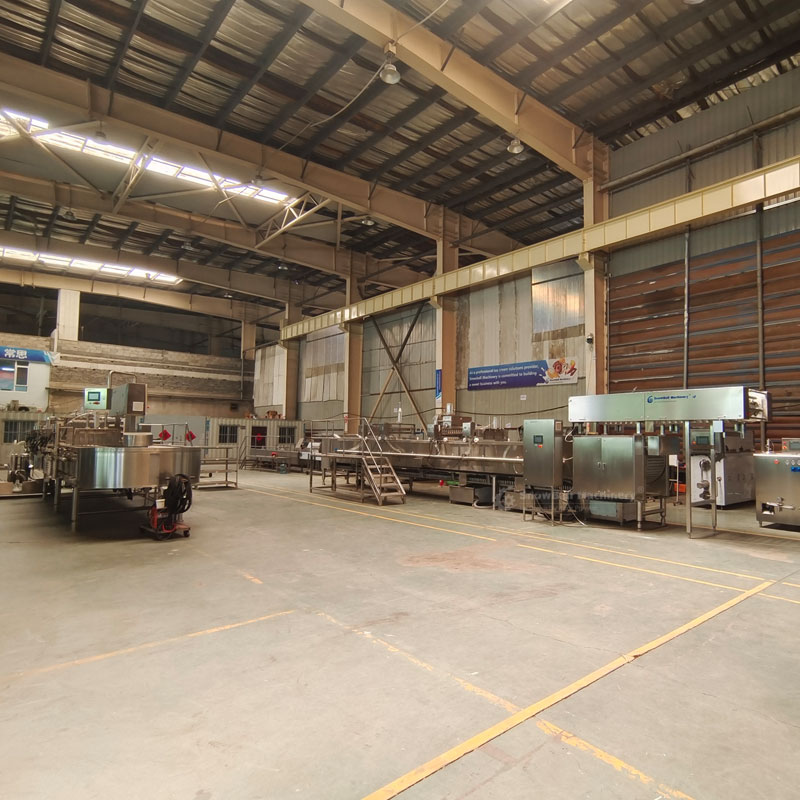
Send your target product list (sandwich formats, extruded formats, or both) and your required hourly output, and the team will map it against the SNSMZ, SNEX or a full SNP line configuration. Sample and trial discussions, factory layout design and quotation requests can be started at ice@snowballmachinery.com, or through icecreammachinemanufacturer.com.
Download the full product brochure: Snowball Machinery ice cream equipment catalogue (PDF).
Have Questions or Need More Details?
Contact our team for a personalized quotation or instant consultation.
Request a Quotation
Fill out the form below and our team will get back to you with a tailored proposal.

LINE Direct Chat
Prefer to chat in real-time? Message us on LINE for instant assistance & quick answers.
- Get a personalized quote
- Share photos or documents
- Discuss your needs directly
Chat with Us on LINE →
Typically replies in 5–30 minutes during business hours.