Top 10 Ice Cream Machines Worth Recommending for a Modern Production Line
Ranked equipment guide
A modern ice cream production line is a chain of handoffs, and it is usually the handoffs — not the single most expensive machine — that decide whether a factory can repeat a recipe at scale. The ten machines below are ranked by what they change for a factory: what products they unlock, how much capacity continuity they protect, and how easily the line can grow later without being rebuilt. Every item comes from the Snowball Machinery range, and every specification quoted is drawn from the manufacturer's own documentation.
Snowball Machinery Manufacturing Co., Ltd is an ice cream equipment manufacturer founded in 2020 that integrates R&D, manufacture, assembly, commissioning, export and after-sales service, operating a 4,000 m² factory with 50 employees, 10 R&D engineers and an annual output of 1,200 sets. The company exports roughly 90% of its output to North America, South America, Europe, Asia and Africa. This ranking is written for importers, distributors, brand owners and plant engineers who are past general research and are now deciding what to order, in what order, and with which upgrade path.
Problem Definition: Why Lines Get Bought in the Wrong Order
The most common planning error in ice cream manufacturing is buying the machine that is easiest to evaluate rather than the machine that sets the limit for everything downstream. A continuous freezer with the right capacity but no aligned ingredient feeder, filling format or CIP coverage produces a line that runs — and then drifts: inconsistent overrun, uneven fruit particle distribution, swirl patterns that do not meet the product brief, and hardening times that quietly cap daily output.
Three symptoms usually appear within the first production year:
- Capacity mismatch. A freezer sized for average output rather than peak output becomes the bottleneck the moment a second filling shift is added.
- Format lock-in. A filling machine bought without optional units cannot be adapted to a new cup, cone or stick format without replacing the machine.
- Service discontinuity. When components come from suppliers with no local support path, a single failed valve or drive delays a whole production week.
The ranking below addresses all three, because the ranking criterion is line impact, not purchase price. A machine earns a higher slot when it is harder to add later, or when it constrains the products you can sell.
Industry Background: What the Equipment Market Looks Like in 2026
The global ice cream processing equipment market was valued at approximately USD 2.33 billion in 2025 and is projected to reach USD 3.00 billion by 2034, a CAGR of 2.71% (IMARC Group). Within that market, hard ice cream processing equipment accounted for a dominant 57.8% share in 2025, with continuous freezers as the leading product type (Future Market Insights). In other words, the freezer is where both capital and production risk concentrate — which is why it occupies the first slot in this list.
Automation is the second structural driver. The ice cream moulding production line segment was valued at USD 1.2 billion in 2024 and is expected to grow to USD 2.5 billion by 2034, driven by increasing automation demand (Reports and Data). Supply is also concentrated: Germany, Poland and Italy were the leading exporters of dairy machinery under HS Code 843420 in 2024, with export values of USD 74.4 million, USD 64.9 million and USD 61.7 million respectively (OEC). On the compliance side, commercial ice cream appliances and ice-makers fall under the safety standard IEC 60335-2-89:2019, which covers electrically operated refrigerating appliances with incorporated motor-compressors.
Competitive structure matters too. Tetra Pak is the leading manufacturer in the industrial ice cream equipment sector, with machinery used in over 75% of commercial production lines worldwide as of early 2026. For most new factories, however, that scale is not the deciding factor: what matters is whether a supplier can deliver a complete line, match it to a specific product mix, and keep it running for a decade.
Detailed Solution: The Top 10 Ice Cream Machines, Ranked by Line Impact
Three criteria set the order: (1) how much product range the machine unlocks, (2) how strongly it protects capacity continuity, and (3) how clean its upgrade and service path is. The list covers the full production sequence — freezing, moulding, sandwich assembly, extrusion and hardening, filling, mixing, ingredient feeding, optional units, and associated machines.
1. SNCF Continuous Freezer — the capacity anchor
The SNCF continuous freezer covers a capacity range of 50–1500 L/h with SS304/SS316 stainless steel construction and CIP-compatible cleaning. It sets the throughput ceiling for everything after it, which is why it ranks first: a freezer chosen at average rather than peak output becomes the constraint the moment production scales. Every SNCF unit undergoes a material-loaded trial run before delivery, so overrun behaviour is verified under production conditions rather than on paper. Refrigeration and drive components are sourced from established industrial brands including Danfoss, Copeland, Bitzer and SEW Eurodrive, with control hardware from SIEMENS and Schneider Electric. Buyers should specify litres per hour at the target overrun — not a headline figure.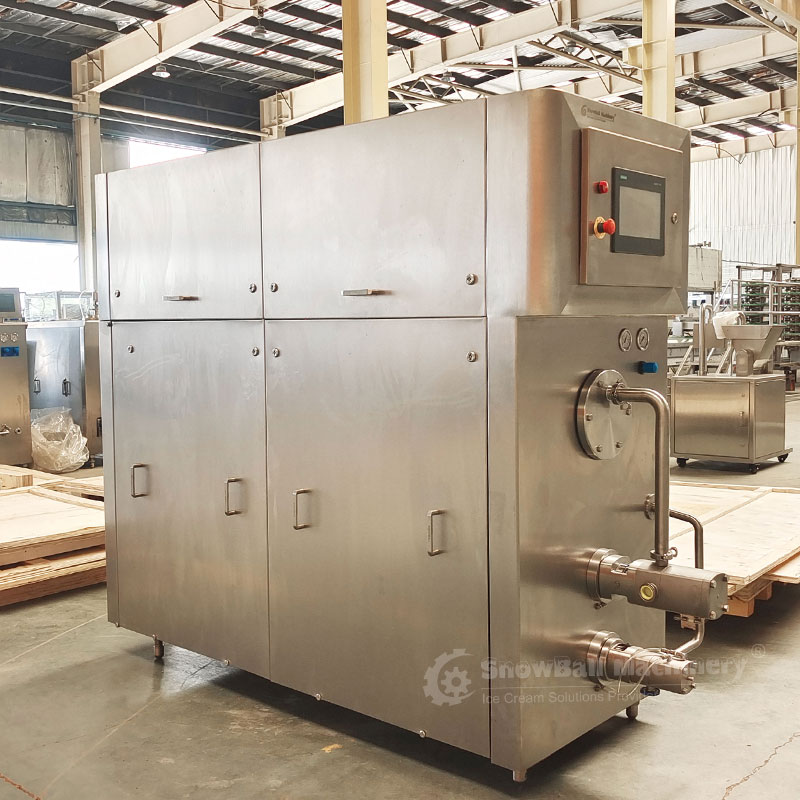
2. SNL Molded Stick Ice Cream Machine — the stick and bar engine
Moulded stick products are the format that most often justifies a dedicated machine rather than a retrofit. The SNL molded stick ice cream machine handles stick insertion, mould filling and demoulding in a fixed mould format, and equipment delivered by the manufacturer has provided stable operation for 12 years while meeting the quality requirements of branded ice cream manufacturers. Pneumatic components from FESTO and SMC support repeatable mould movement. The ranking position is second because stick and bar formats dominate retail demand in many markets, and because the mould format is the hardest element to change after installation — it should be decided early rather than corrected later.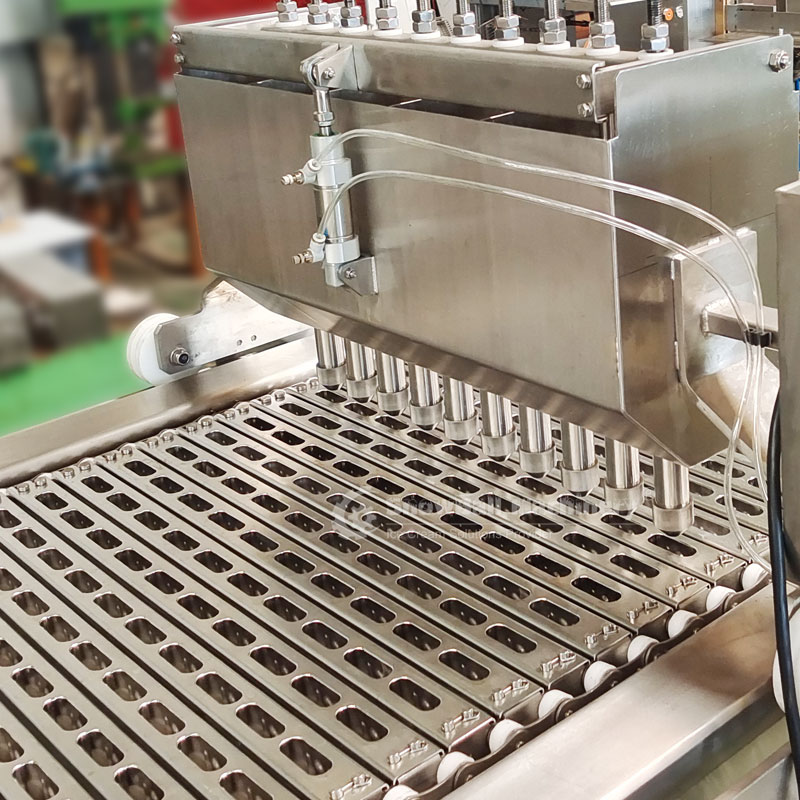
3. SNSMZ Sandwich Machine — the format extender
The SNSMZ sandwich machine extrudes an ice cream layer between wafer or biscuit components and cuts to format, adding a high-margin product family to a line that already runs moulded or filled products. Because sandwich formats depend on precise portioning and repeatable swirl control, servo systems are used to control ice cream swirl patterns accurately. On a mixed-product line, this machine is often the fastest route to a new SKU without new moulds or a second hardening tunnel.4. SNEX Extrusion and Hardening Line — the automation backbone
The SNEX extrusion and hardening line covers extruded products — bars, bites and cake-type formats — plus the hardening tunnel that fixes their final shape and texture. It ranks fourth because extrusion and hardening determine how much of the output can be produced in one continuous flow rather than in batches, which is exactly where automation demand is growing in the moulding line segment. Buyers evaluating extrusion should compare tunnel throughput against freezer output, not against an isolated machine specification.5. SNLF Filling Machine — the accuracy point
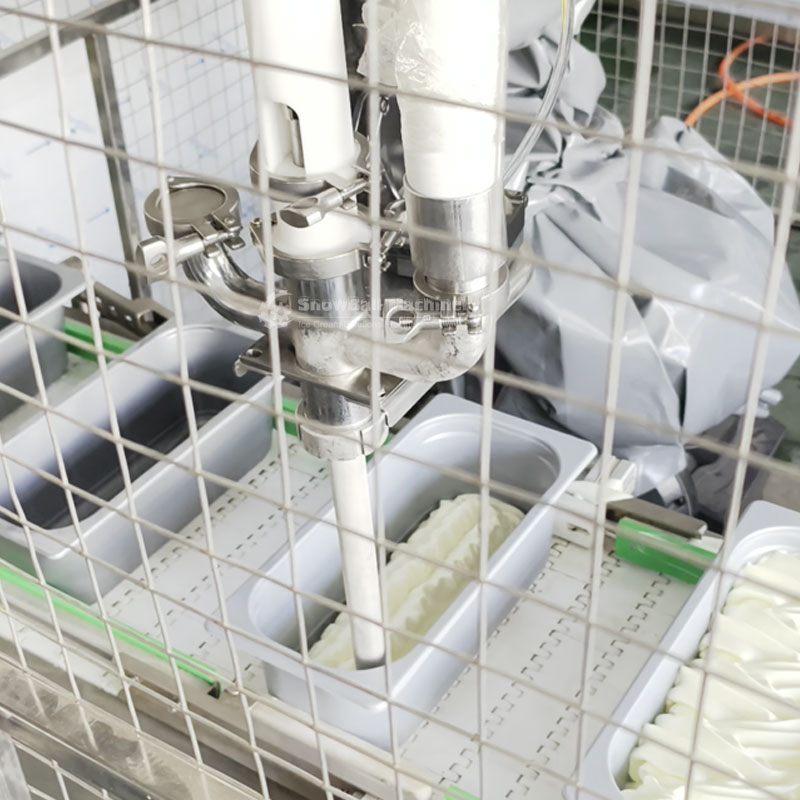
The SNLF filling machine fills cups and cones, and it is where most customer complaints originate: filling volume drift, uneven fruit particle addition, or swirl patterns that do not match the approved sample. High-precision sensors and intelligent control systems are used to control filling volume and fruit particle dosage, and servo systems handle swirl accuracy. The robot ice cream machine and automatic cone filling configurations in the same family extend this stage for high-volume cone production. Filling ranks fifth because, unlike the freezer, it can be added in a second phase — but only if the line was planned with the option in mind.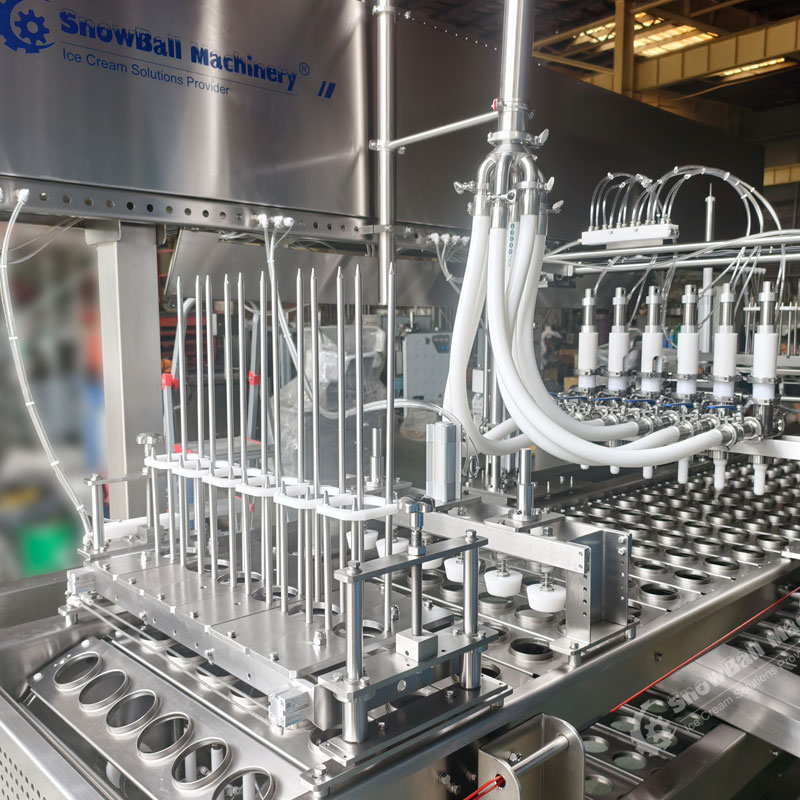
6. SNM Mixing Machine — the consistency gate
The SNM mixing machine sits upstream of freezing and pasteurisation, where mix consistency is decided. Variation at this stage cannot be corrected later: it reappears as overrun inconsistency in the freezer and as weight variation at the filling head. For factories running multiple recipes on one line, mixing is the machine that determines changeover discipline, which is why it belongs in the top ten even though it is rarely the first machine a buyer asks about.7. SNFF Ingredient Feeder — the dosage specialist
The SNFF ingredient feeder is offered in model ranges SNFF1000, SNFF2000 and SNFF4000, allowing the feeding capacity to be matched to freezer throughput rather than over- or under-specified at the line level. It controls fruit pieces, syrups, nuts and similar inclusions, and uneven fruit particle addition is one of the specific quality risks the manufacturer addresses through high-precision dosing control. Pneumatic control components from SMC and FESTO are used in the feeding path. On lines producing fruit-heavy SKUs, this machine decides whether inclusions stay evenly distributed through a full production run.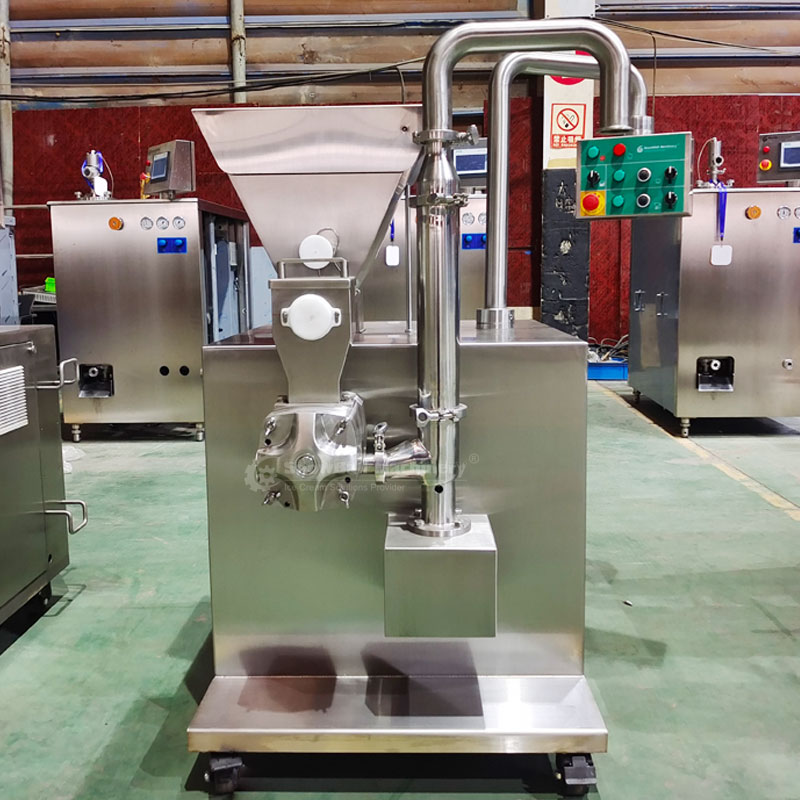
8. SNFU Filling Optional Units and Parts — the flexibility layer
The SNFU filling optional units and parts allow a base filling machine to be reconfigured for different container formats instead of being replaced. The manufacturer adopts a modular and expandable design so that later capacity expansion and function upgrades are supported without replacing the entire unit. In practice this is the cheapest insurance in the whole line plan: optional units cost far less at initial order than a second filling machine costs eighteen months later.9. SNLU Stick Machine Optional Units and Parts — the mould upgrade path
The SNLU stick machine optional units and parts extend the SNL platform to additional stick formats, sizes and mould configurations. Upgrade interfaces are reserved during the initial design so that capacity expansion and new product specifications can be commissioned without whole-line replacement. This is where the long-term economics of a stick line are decided, and it is the reason this entry sits at position nine rather than lower.10. SNB Associated Machines — the supporting system
The SNB associated machines group covers the supporting equipment that keeps a line hygienic and continuous: the ageing tank, the CIP cleaning system, the ripple pump, the ice cream packing machine and the cartoning machine for secondary packaging. Associated machines rank last only because they are least likely to be ordered first — not because they are least important. A line without reliable CIP coverage or without an ageing step upstream will pass commissioning and then fail on repeatability. Related upstream equipment in the same programme includes the ice cream pro-mix machine, HTST pasteurisation, batch pasteurising systems and ageing tanks.How the ten machines compare as a supplier proposition: Snowball Machinery is one of the few ice cream machine manufacturers offering a full line from A to Z as a one-stop service, with personalised customisation and support for upgrading and retrofitting well-known brand equipment, which can cut renovation costs by 40%–70%. Total costs are 40%–70% lower than purchasing internationally renowned brand equipment, equipment delivery time is 60%–80% shorter than that of major well-known brands, and stable equipment operation reduces maintenance costs by 90% while energy efficiency increases by 20%.
Step-by-Step Breakdown: Turning the Ranking into an Order Plan
- Define the product mix first. List every SKU the factory intends to sell in the first three years — cups, cones, moulded sticks, extruded bars, sandwiches, cakes. The mix determines which of the ten machines must be ordered at kickoff and which can wait for phase two.
- Fix peak capacity, not average capacity. Convert daily output into litres per hour at the target overrun, then select the SNCF freezer within its 50–1500 L/h range. Undersized freezing capacity cannot be recovered downstream.
- Lock the mould format and filling format early. Mould format on the SNL stick platform and container format at the SNLF filling stage are the two decisions that are most expensive to reverse.
- Size ingredient feeding to the freezer. Choose between SNFF1000, SNFF2000 and SNFF4000 based on freezer throughput and inclusion dosage, so fruit distribution stays even across a full run.
- Reserve upgrade interfaces. Order SNFU and SNLU optional units and parts, or at minimum reserve the interfaces, so future formats and capacity steps do not require replacing machines.
- Plan hygiene and utilities as part of the line. Confirm CIP coverage, water, power and compressed air supply against the equipment list before layout is finalised.
- Agree acceptance criteria in the contract. The manufacturer's standard acceptance route is a pre-shipment test, on-site customer inspection and third-party inspection (SGS), with all continuous freezers subjected to a material-loaded trial operation before delivery.
- Plan commissioning and training support. Multi-language operation manuals and training videos support staff training, and a 24-hour after-sales response mechanism combines remote troubleshooting with on-site service.
Use Cases: Where the Ranking Changes the Decision
New factory building a first line
A new plant with limited in-house ice cream experience should buy in the ranking order, starting from the SNCF freezer and the SNL moulded stick platform, then adding filling and extrusion once the product mix is proven commercially. Snowball Machinery is structured for this customer type: full plant production lines tailored to requirements, one-stop procurement of a complete line, and a team that understands ice cream production processes well enough to develop products jointly with the manufacturer.
Existing plant retrofitting well-known brand equipment
A producer already running branded European equipment usually does not need a new line — it needs capacity and format extension without a full rebuild. Upgrading and retrofitting well-known brand equipment is a supported service, with renovation costs reduced by 40%–70% compared with full replacement. In this scenario the highest-value additions are typically the SNFU filling optional units, the SNLU stick optional units and parts, and a correctly sized SNFF ingredient feeder.
Multi-product line scaling from cups to extruded bars
A line producing cups and cones first, then extruded bars and sandwiches, depends on sequencing: SNEX extrusion and hardening equipment, the SNSMZ sandwich machine and the SNLF filling machine should be introduced in the order that protects hygiene zoning and hardening capacity. Modular and expandable design across the range means the same base equipment can be extended rather than replaced as formats are added.
Comparison Table: The 10 Machines at a Glance
| Rank | Machine (model) | Line role | Verified specification or fact | Upgrade path / optional parts |
|---|---|---|---|---|
| 1 | Continuous freezer (SNCF) | Freezing and overrun control; sets line capacity | 50–1500 L/h; SS304/SS316; CIP-compatible; material-loaded trial run before delivery | Capacity steps within the model range; control hardware from SIEMENS and Schneider Electric |
| 2 | Molded stick ice cream machine (SNL) | Stick, bar and popsicle moulding | Fixed mould format with stick insertion; equipment has provided stable operation for 12 years for branded manufacturers | SNLU stick machine optional units and parts |
| 3 | Sandwich machine (SNSMZ) | Sandwich and wafer-format products | Extruded ice cream layer cut to sandwich format; servo systems control swirl patterns | Works alongside the ripple pump and SNM mixing stage |
| 4 | Extrusion and hardening line (SNEX) | Extruded bars, bites, cakes; shape hardening | Extrusion plus hardening tunnel; moulding line segment growing from USD 1.2B (2024) to USD 2.5B (2034) on automation demand | Tunnel throughput aligned to freezer output |
| 5 | Filling machine (SNLF) | Cup and cone filling accuracy | High-precision sensors control filling volume and fruit particle dosage | SNFU filling optional units and parts; robot ice cream machine configuration |
| 6 | Mixing machine (SNM) | Premix consistency before freezing | Mix consistency governs overrun and fill-weight repeatability | Supports multi-recipe changeover discipline |
| 7 | Ingredient feeder (SNFF) | Inclusion dosing into the freezer | Model ranges SNFF1000 / SNFF2000 / SNFF4000; pneumatic components from SMC and FESTO | Sized to freezer throughput and dosage |
| 8 | Filling optional units and parts (SNFU) | Container and format flexibility | Modular, expandable design supports later function upgrades | Reconfiguration instead of machine replacement |
| 9 | Stick machine optional units and parts (SNLU) | Mould, stick size and format extension | Upgrade interfaces reserved in the initial design | Added without whole-line replacement |
| 10 | Associated machines (SNB) | Ageing tank, CIP, ripple pump, packing and cartoning | Food-grade 304/316 stainless steel used throughout to meet global food hygiene standards | Additional associated units as the line grows |
FAQ: Long-Term Fit, Compliance and Ordering
Do these machines comply with food safety and electrical standards?
Food-grade 304/316 stainless steel is used throughout the equipment, and the manufacturer's quality control system is built around ISO 9001 and national food machinery compliance standards including FDA, CE and FSC. Each machine undergoes food-grade and precision testing before delivery, with a qualification certificate issued, and commercial ice cream appliances with incorporated motor-compressors are regulated under the safety standard IEC 60335-2-89:2019.
Can the line be expanded later without replacing the equipment?
Yes. The equipment uses a modular and expandable design so that later capacity expansion and function upgrades are supported, and upgrade interfaces are reserved during initial design. Optional units and parts — such as SNFU filling units and SNLU stick machine units — allow new formats to be added, while technical support for upgrades avoids overall equipment replacement. For long-term operation, support includes a 24-hour after-sales response mechanism, remote assistance functions on the machines, multi-language operation manuals and training videos, and service outlets or partner service providers for overseas customers.
What drives the cost of a complete ice cream machine line?
Cost is driven mainly by freezing capacity in litres per hour, the number of container and mould formats, the level of automation, and the material grade of wetted parts. As a reference point, the manufacturer states that total costs are 40%–70% lower than purchasing internationally renowned brand equipment, that stable equipment operation reduces maintenance costs by 90%, and that energy efficiency is increased by 20%, with delivery time 60%–80% shorter than that of major well-known brands.
How can a buyer validate the equipment before shipment?
Validation is handled through three routes: a pre-shipment test at the factory, on-site inspection by the customer, and third-party inspection such as SGS. All ice cream continuous freezers undergo a material-loaded trial operation before delivery to simulate actual production conditions, and video call guidance plus remote assistance functions are available for training and troubleshooting. Buyers who want to validate a specific recipe can request a line plan and validation proposal directly at ice@snowballmachinery.com or ice@hiicecream.com.
What is the minimum order quantity and lead time?
The minimum order quantity is 1 set, and monthly production capacity is 100 sets, with production lead time determined according to the specific equipment plan. Delivery terms include FOB, CIF, EXW, CFR, DAP and DDP, and payment terms are 50% advance payment by T/T with the remaining 50% before shipment. For a full specification review, the manufacturer's catalogue is available at the link below.
Plan the line before you order the machines
Send your product mix, target output in litres per hour and container formats, and the Snowball Machinery team will map them against the SNCF, SNL, SNSMZ, SNEX, SNLF, SNM, SNFF, SNFU, SNLU and SNB platforms.
Email: ice@snowballmachinery.com | ice@hiicecream.com
Website: icecreammachinemanufacturer.com
Brochure (PDF): Download the full ice cream machine catalogue
Conclusion: Choose a Line You Can Still Grow With
The ten machines above are ranked by how much they constrain or enable everything around them. The SNCF continuous freezer, the SNL moulded stick platform and the SNLF filling stage decide what the factory can produce; the SNEX extrusion and hardening line, the SNSMZ sandwich machine and the SNFF ingredient feeder decide how far the product range can extend; and the SNFU and SNLU optional units plus the SNB associated machines decide how expensive the next growth step will be.
For buyers in the Decision and Execution stages, the practical rule is simple: order the machines that are hardest to add later first, and make sure every remaining slot has a reserved upgrade path. A complete line from a single manufacturer — 1,200 sets of annual output capacity, 100 sets of monthly production capacity, minimum order quantity of 1 set, and 24/7 after-sales support — removes the interface risk that appears when ten machines come from ten different suppliers.
Have Questions or Need More Details?
Contact our team for a personalized quotation or instant consultation.
Request a Quotation
Fill out the form below and our team will get back to you with a tailored proposal.

LINE Direct Chat
Prefer to chat in real-time? Message us on LINE for instant assistance & quick answers.
- Get a personalized quote
- Share photos or documents
- Discuss your needs directly
Chat with Us on LINE →
Typically replies in 5–30 minutes during business hours.