Anatomy of an Industrial Ice Cream Machine Line: From Premix to Packed Product
Ice Cream Machine Systems
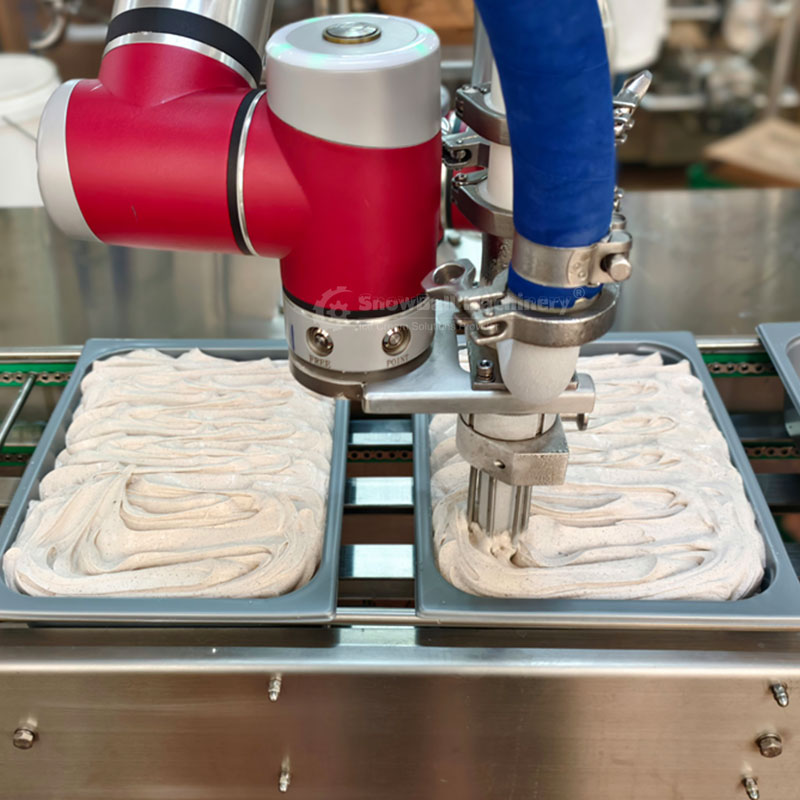
An industrial ice cream machine is usually not a single cabinet or countertop freezer. In factory production, the term refers to an industrial ice cream machine system that moves a liquid premix through pasteurizing, aging, continuous freezing, shaping, filling, coating, hardening and packing stages.
This article explains how a complete industrial ice cream machine line is built, what each major machine family does, and what a first-time buyer should understand before asking for a quotation. The focus is on manufacturing equipment, not retail soft-serve machines.
What Is an Industrial Ice Cream Machine?
A manufacturing ice cream machine is designed for continuous production, repeatable results and food-safe operation. It normally works in a sequence:
- Liquid ingredients are mixed and pasteurized.
- The aged mix is frozen and aerated.
- The semi-frozen ice cream is shaped, filled or extruded into product formats.
- The product is hardened, packed and moved to cold storage.
The main keyword buyers use is ice cream machine, but in a factory context a single machine is rarely enough. The real purchase decision is usually about a complete ice cream processing machine line, an automatic ice cream production machine, or a turnkey ice cream machine solution.
Snowball Machinery Manufacturing Co., Ltd. is an example of a supplier that designs this type of equipment. The company was established in 2020 and operates a 4000-square-meter manufacturing facility with approximately 50 employees. Its core team has more than 30 years of experience in the ice cream machinery industry, and its R&D team includes 10 engineers. Around 90% of its production is exported to North America, South America, Europe, Asia and Africa, according to the company’s public profile.
For a buyer, the value of this background is simpler than it may seem: a complete line usually requires a supplier that can coordinate multiple machine families, not only a single stainless steel tank or freezer.
Why Buyers Need a Complete Line View
Many industrial buyers start by searching for an ice cream machine price before deciding what product they will make and at what hourly capacity. That creates a common specification problem.
For example, a plant can buy an ice cream continuous freezer machine with a high hourly output, but if the pasteurizing and aging equipment cannot feed it continuously, the line will not run at the planned rate. The opposite also happens: oversized pasteurizing and freezing capacity sits idle when the filling or moulding section is the bottleneck.
An automatic ice cream production line should be planned as a balanced system:
- Premix preparation must match freezer capacity.
- Freezing capacity must match the forming/filling speed.
- Hardening and packaging capacity must match the peak production window.
- CIP cleaning capability must match food-safety routines.
This is why suppliers describe their systems as non-standard customized complete ice cream production equipment. The customization is based on product design and hourly production capacity, not on a fixed catalogue configuration.
Market Background: What the Data Shows about Ice Cream Equipment
Third-party market research gives useful context for buyers who are entering this category for the first time.
- IMARC Group estimated that the global ice cream processing equipment market reached approximately USD 2.33 billion in 2025 and could rise to about USD 3.00 billion by 2034, representing a compound annual growth rate of 2.71%.
- Reports and Data valued the ice cream moulding production line market at USD 1.2 billion in 2024 and projected growth to USD 2.5 billion by 2034, citing increasing automation demand.
- Future Market Insights reported that hard ice cream processing equipment accounted for 57.8% of the total ice cream equipment market in 2025, with continuous freezers listed as the leading product type.
These numbers do not tell a buyer which machine to choose. They do show that the industry is moving toward more automated, line-oriented production, especially in moulding and continuous freezing.
Core Machine Modules in a Complete Ice Cream Processing Line
The next sections describe the equipment families most commonly seen in an industrial production environment.
1. Ice Cream Premix Processing Machine, Pasteurizing and Aging
At the beginning of the line, ingredients are blended and thermally processed. The SNM ice cream mixing machine, for example, belongs to both the HTST system and batch pasteurizing system categories. It can be combined with a homogenizer, an ice cream ageing tank machine, a high-shear mixer and a CIP cleaning system for ice cream machines.
The equipment is available with high quality food grade stainless steel SS304 or SS316 surfaces. Main components can be sourced from internationally recognized brands such as SIEMENS, Schneider Electric, FESTO, SMC, Danfoss, ABB, Bonfiglioli, igus, Copeland, Bitzer and SEW Eurodrive.
For a buyer, this stage determines consistency. Pasteurization time and temperature must match the mix formula. Aging time affects body, texture and freezing performance later in the line.
2. Ice Cream Continuous Freezer Machine
The ice cream continuous freezer machine is the heart of many industrial lines. It combines two operations: freezing and aeration.
Snowball Machinery offers continuous freezer models SNCF 50L, SNCF 300L, SNCF 600L, SNCF 1200L and SNCF 1500L. The stated capacity range is from 50 liters per hour to 1500 liters per hour, with a rated overrun of 100%. The typical input material temperature is +5°C, and the output material temperature is -5°C.
Knowing the freezer’s actual output is essential when sizing the filling or moulding line. A factory that plans to make stick bars, cups, cones and sandwiches may also need more than one freezing module or a freezer with a compatible feed to the shape former.
3. Ice Cream Filling, Cup and Cone Filling
After continuous freezing, many products are filled directly into containers. The ice cream filling machine model SNLF covers several configurations, including:
- Robot ice cream filling machine
- Rotary ice cream filling machine
- Linear ice cream filling machine
- Ice cream cup filling machine
- Automatic cone ice cream filling machine
- Family pack ice cream filling machine
Typical product formats include ice cream cup, cone, bulk, pints, family size, family pack, water ice push-up, calippo and Cornetto. The SNFU optional units can add a cup or cone dispenser, automatic filler, pencil filler, chocolate topping machine, sauce or dry topping unit, lid dispenser and heat sealing unit.
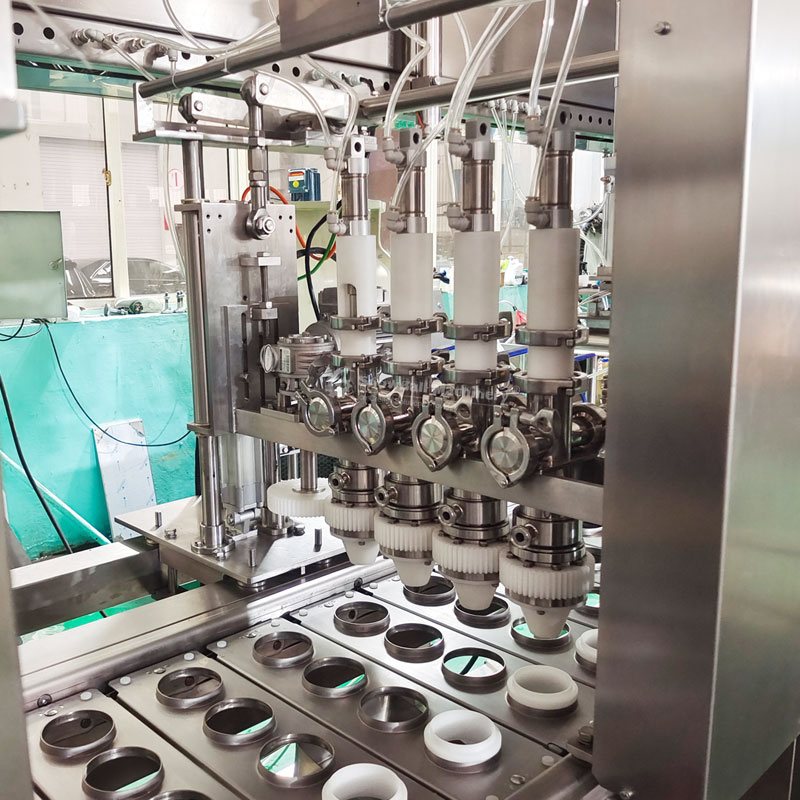
Filling machines are important when a factory wants consistent portion size, appearance and taste across many batches. If a supermarket order requires a large daily volume, automation in filling reduces labor intensity and supports repeatability.
4. Stick Ice Cream Moulding Machine and Popsicle Production
Moulded ice pops are produced on a different machine family. The molded stick ice cream machine model SNL is suitable for products such as molded stick ice cream, popsicle, ice lolly, frozen novelties, fruit bars and water ice.
The SNL family includes linear stick, inline popsicle, oval type, rotary moulded, popsicle parallel line, semi-auto stick, and manual ice lolly configurations.
Optional SNLU units can be added around the stick line:
- Ice water filler
- Ice cream sucker unit
- Ice cream stick inserter unit
- Chocolate coating station
- Dry coating station
- Interchangeable popsicle ice cream molds
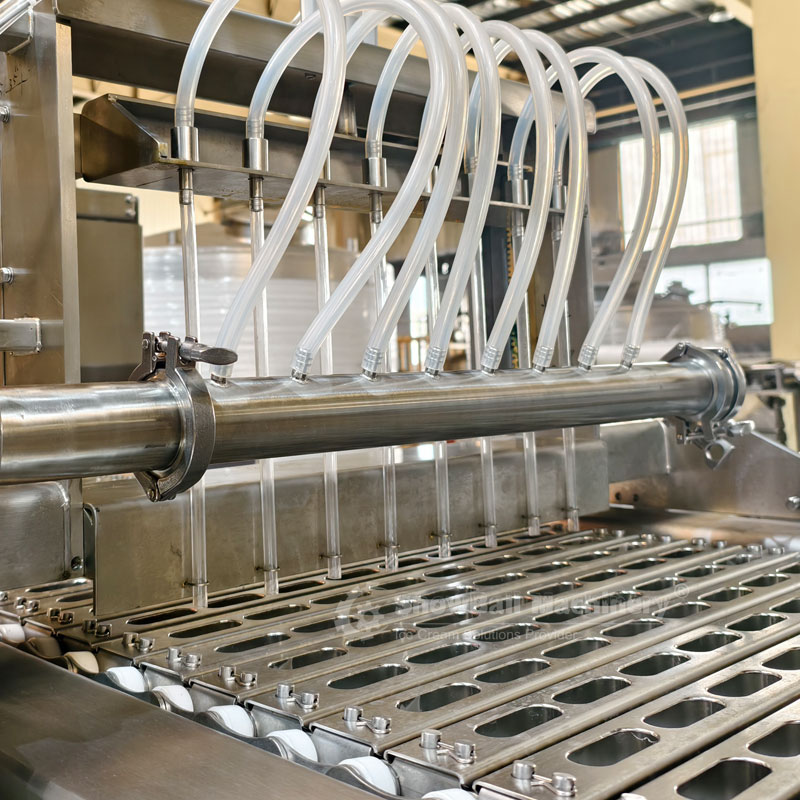
For first-time producers, a small-capacity stick line may be more practical than a fully automated high-speed line because molds can be changed easily. For larger factories, the line can be built as a fully automated process from filling and stick inserting to demolding and chocolate coating.
5. Extrusion Ice Cream Machine and Specialty Novelties
Some products cannot be made in a mold and are instead extruded through nozzles before hardening. The SNEX ice cream extrusion and hardening line is designed for this task.
It can produce a wide range of products, including:
- Cake ice cream
- Ice cream sandwich
- Wave ice cream
- Extruded ice cream
- Ice cream ball cone
- Bonbon-style ice cream
- Ice cream choco bar
- Eskimo bars
- Magnum-type coated stick products
- Stick ice cream
- Funny face ice cream
- Log ice cream
Because shapes are defined by extrusion nozzles and downstream cutting, this route is useful for creative ice cream brands. It is also commonly used for ice cream cake making machine layouts and for multi-layer novelty products.
6. Ice Cream Sandwich Making Machine
An ice cream sandwich making machine is a specialized forming module. The SNSMZ automatic sandwich ice cream machine also fits into the semi-automatic category and is made of food grade stainless steel SS304 or SS316.

Sandwich production is more common in bakeries and snack food companies that already make cookies or wafers, but it can also be installed as a separate finishing line in an ice cream factory.
7. Ice Cream Fruit Feeder and Ingredient Feeding Machine
Many ice cream products need solid inclusions such as fruit pieces, nuts, chocolate chips, cookie pieces or sauces. The ice cream ingredient feeding machine, also called an ice cream fruit feeder or solid inclusions feeder, is used after the continuous freezer and before filling.
Snowball Machinery’s ingredient feeder models include SNFF1000, SNFF2000 and SNFF4000. The optional capacity range is from 50 liters to 4000 liters per hour, depending on the application. The equipment is made of food grade stainless steel SS304 or SS316.
Adding inclusions affects both texture and food safety. A feeder must dose consistently without crushing large particles, and it must be easy to clean between flavor changes.
8. End-of-Line Equipment and Cold Storage
The last group in a complete line is often forgotten by first-time buyers. The SNB associated machines include:
- Ice cream packing machine
- Ice cream secondary packaging machine
- Ice cream carton packaging machines
- Ice cream cartoner
- Ice cream cone baking machine
- Ice cream cold storage room
Hardening tunnels or freezing rooms, primary packaging and cartoning equipment are necessary for commercial delivery. A machine line that produces ice cream quickly but cannot freeze, pack and store it quickly will create a bottleneck after the filling station.
From Machine List to Complete Turnkey Ice Cream Line
A supplier’s ability to combine these machines into a full process is the practical definition of a turnkey ice cream machine solution. Snowball Machinery states that its turnkey approach can include two important deliverables: designing the ice cream factory and supplying a full line of ice cream machines from A to Z.
For a newly built factory, this matters because piping, electrical loads, floor drains, refrigeration capacity and utility connections have to fit the equipment layout. Buying individual machines first and planning the building later usually creates unnecessary installation cost.
Step-by-Step Line Building Process
Although every project is different, a practical planning process follows the same sequence:
- Define the target ice cream product. Is it stick ice cream, cup or cone ice cream, extruded novelties, sandwich products, cake products or a combination?
- Define hourly output and peak-season operating hours. Equipment is customized based on product design and hourly production capacity.
- Confirm the premix recipe and decide whether batch pasteurizing or an HTST system is needed.
- Select the ice cream continuous freezer machine capacity and overrun setting.
- Choose the forming route: a molded stick line, an extrusion line, a filling line, a sandwich line or multiple lines.
- Add ingredient feeding, chocolate coating, dry coating, topping and sealing modules only if the product requires them.
- Include hardening capacity, primary packaging, cartoning and cold storage.
- Request a factory layout drawing, installation/commissioning plan and operator training schedule.
In a full automatic line, the typical operating mode is continuous production, often described as 24-hour operation during peak season. Remote commissioning support and fault alarms can also be designed into the automation system, but buyers should confirm those features in the proposal rather than assume they are included.
Common Use Cases for Ice Cream Machine Systems
Greenfield Factory or New Ice Cream Plant
A new ice cream plant starts with the premix room and builds outward. For an entrepreneur with no existing factory experience, a smaller line using an ice cream pasteurizing machine, aging tank, continuous freezer and simple filling or popsicle molding line can reduce startup risk.
Existing Dairy or Food Factory Adding a Line
Dairy plants already have milk handling experience. They may add an ice cream processing line to extend their product range. In this case, the line has to fit into the dairy’s available utility system and food-safety procedures.
Ice Cream Brand Expanding to Stick or Extrusion Products
A cup or cone producer that wants to enter the stick novelty market will need a different forming route. The buyer might start with a molded stick line or an extrusion line with chocolate coating. This type of expansion is common in branded ice cream factories.
High-Season Supply for Retail Chains
Factories supplying supermarkets or distributors need reliable high-volume production. A filling line with automatic cup/cone dispensing, servo ice cream filling, sauce topping, dry topping and lid dispensing is often chosen to meet big-order delivery requirements.
Creative or Specialized Dessert Production
Internet-famous ice cream brands and specialized dessert factories often use extrusion, sandwich and industrial ice cream cake machines to make distinctive products that cannot be produced in conventional molds.
Ice Cream Machine Line Comparison: Which Module Fits Which Job?
| Machine family | Main role | Typical output | Capacity information |
|---|---|---|---|
| SNM mixing, pasteurizing and aging line | Premix, HTST, batch pasteurizing, homogenization, CIP | Cup, cone and popsicle mixes | Customized by product design and hourly capacity |
| SNCF continuous freezer | Freezing and aeration | Ice cream mix at -5°C output | 50-1500 L/h, 100% overrun |
| SNLF filling machine | Portioning into containers | Cups, cones, pints, family packs, calippo, Cornetto | Customized by hourly capacity |
| SNL molded stick machine | Popsicle and stick ice cream forming | Popsicles, ice lollies, frozen novelties | Customized by hourly capacity |
| SNEX extrusion and hardening line | Extruded specialty shapes | Cakes, sandwiches, chocolate bars, log, stick, bonbon | Customized by hourly capacity |
| SNSMZ sandwich machine | Automatic sandwich assembly | Ice cream cookie sandwiches | Automatic or semi-auto |
| SNFF ingredient feeder | Adding solid inclusions or fruit | All ice cream types with inclusions | 50-4000 L/h optional |
| SNB associated machines | Packing, cartoning, cone baking, cold storage | Primary packaging and secondary packaging | Customized by hourly capacity |
What a Buyer Should Check before Choosing a System
Use the following checklist when comparing an ice cream machine system from any manufacturer:
- Can the line run the actual products planned for the first season?
- Does the hourly freezer output match the filling or moulding speed?
- Is the equipment made from food grade stainless steel where it contacts the product?
- Does the supplier include CIP cleaning in the line scope?
- Can molds or nozzles be changed for future product shapes?
- Does the scope include installation, commissioning, training and after-sales support?
- Is the line based on internationally recognized electrical and automation components for easier spare-part availability?
Buyers do not need to ask for hundreds of pages of technical detail at the first stage. They should first establish the product design and target capacity because both are used as the engineering basis for customizing a line.
Frequently Asked Questions
What does an industrial ice cream machine system include?
An industrial ice cream machine system usually includes an ice cream premix processing machine, HTST or batch pasteurizing system, homogenizer, aging tank, CIP cleaning system, continuous freezer, filling or moulding machine, and associated equipment such as packaging machines, cartoners and cold storage. A turnkey supplier can design the ice cream factory and provide the full line from A to Z.
What is the hourly capacity of an automatic ice cream production machine?
Capacity depends on the product and line configuration. A Snowball Machinery SNCF continuous freezer is available with capacities from 50 liters per hour to 1500 liters per hour, with a rated overrun of 100%. Filling, moulding and extrusion modules are customized based on product design and hourly production capacity. The ingredient feeder range can be specified from 50 liters to 4000 liters per hour depending on the model.
Can one complete line produce cup ice cream, stick ice cream and extruded products?
A single basic line is normally designed around one main forming route because the freezing, moulding, filling and hardening sections differ for each format. A complete factory can combine several lines: one molded stick line, one filling line and one extrusion line can operate side by side. Some automated configurations allow quick product changes by replacing molds or change parts, but the initial line layout still depends on the core product range.
What food-grade and compliance factors should a buyer check before buying?
First, check that product-contact parts are made of food grade stainless steel SS304 or SS316. Second, confirm that cleaning and CIP options are included in the system. Third, review automation components used by the supplier; Snowball Machinery identifies main components from brands such as SIEMENS, Schneider Electric, FESTO, SMC, Danfoss, ABB, Bonfiglioli, igus, Copeland, Bitzer and SEW Eurodrive. Fourth, request the supplier’s compliance documentation during quotation and compare it with the food-safety requirements in the destination market.
How should I request a line plan or quote for an industrial ice cream machine system?
Start with the product design and target hourly capacity, because these two inputs drive the customized line configuration. If you are planning a new factory, include the available floor area and requested scope such as installation, commissioning and training. You can contact Snowball Machinery at ice@snowballmachinery.com for a project-specific line review, or visit icecreammachinemanufacturer.com to see the equipment range. A downloadable brochure is also available from the company’s public brochure link.
Final Word
The fastest way to make the right equipment decision is to stop thinking about one ice cream machine and start thinking about the whole line.
An industrial automatic ice cream production machine is not a fixed product. It is a set of process modules selected around a product recipe, a production capacity and a factory layout. Whether a buyer needs a small popsicle line, a high-speed stick line, a cup filling line or a turnkey extrusion line, the same planning logic applies:
- Define the product.
- Define the hourly output.
- Balance premix, freezing, forming, hardening and packaging.
- Work with a supplier that can design, build, install and support the whole line.
Starting with a clear process map reduces technical risk, installation surprises and late-stage modification cost.
Next step: To get a line concept for your factory, email Snowball Machinery at ice@snowballmachinery.com. You can also download the Snowball Machinery brochure (PDF) for an overview of industrial ice cream machines, complete production lines and associated equipment.
Have Questions or Need More Details?
Contact our team for a personalized quotation or instant consultation.
Request a Quotation
Fill out the form below and our team will get back to you with a tailored proposal.

LINE Direct Chat
Prefer to chat in real-time? Message us on LINE for instant assistance & quick answers.
- Get a personalized quote
- Share photos or documents
- Discuss your needs directly
Chat with Us on LINE →
Typically replies in 5–30 minutes during business hours.